Making Executive Function Visible: The Cupcake Experiment
Executive Function Activities · Guided activity for older kids and teens
Before you say ‘think ahead,’ try making cupcakes.
A shared baking activity for seeing how a plan comes together, finding what helps, and enjoying something you made together.
You can see it coming. The bowl is too small. There’s nowhere to put the hot pan. The cupcakes will need to cool before anyone can frost them, which may be the most disappointing news of the afternoon.
Your child is thinking about cupcakes. You’re thinking about the next six things that could go wrong. Before long, you’re providing a running commentary neither of you particularly wanted.
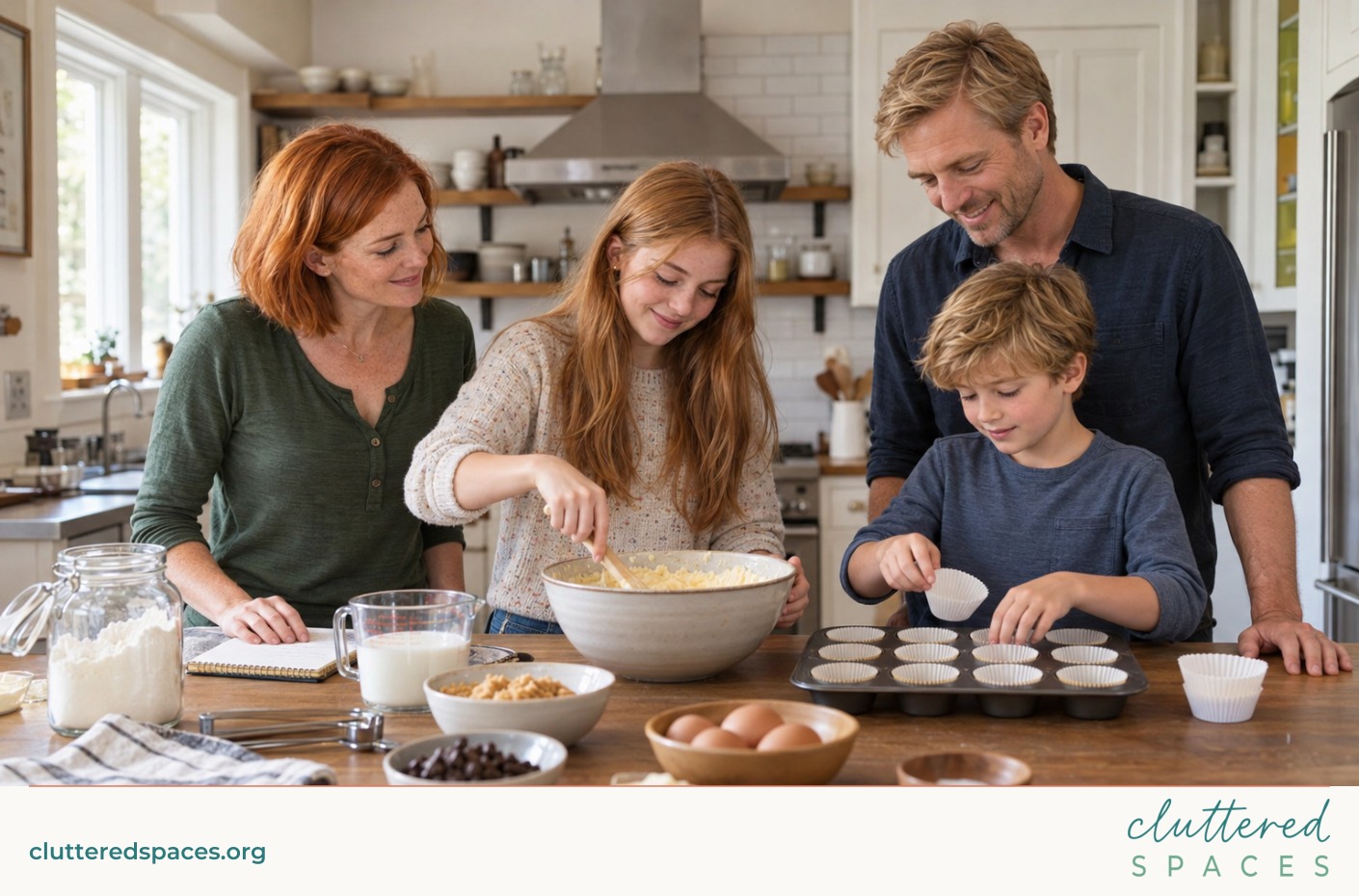
If that sounds familiar, here’s something to try the next time you bake together. Before you start mixing, ask: “Can you picture yourself making these? What do you think happens first?” Then give the answer a little room.
You might hear a whole plan. You might hear “mix the stuff” and nothing after that. Either way, you’ve found a place to start a conversation that is usually much harder to have in the middle of missing homework.
Try the activity · Get the free cupcake kit
There’s a lot hiding inside ‘think ahead’
We say it because we want life to be easier for our kids. But “think ahead” can leave out the very steps they need help finding. Picture what? How far ahead? Which details matter?
Working memory is part of that process: keeping information available while you use it. In the kitchen, that might mean holding the next direction in mind while you finish measuring. A mental preview can also help connect what you’re doing now with what comes next. These processes work alongside planning, pausing, and adjusting. 1, 2
You don’t need to explain all of that before handing over the mixing bowl. The useful question is much smaller: what part of the process can we make easier to see?
For the broader picture, our guide to understanding executive function explains how these skills show up in everyday life.
Try it with something that ends in frosting
A boxed mix that fits your family’s food needs is a good place to begin. It gives you a fairly simple task, clear directions, and an outcome your child might actually want. Pick a time when you have some room for a few surprises. Use the recipe’s ingredient and equipment list, and allow time for baking and cooling. Wash hands and work surfaces, avoid tasting raw batter, and agree who will handle hot pans. If cupcakes aren’t appealing, choose another familiar food you’d like to make.
Invite your child or teen in: “Want to bake together and notice what makes it easier? Would you like questions, a few notes afterward, or just baking?” Agree on that part, too. Either person can change their mind. Choose the flavor, decorations, music, and jobs together, including who will handle the oven, cooling, and cleanup. A ridiculous decorating theme is welcome if you both like the idea; nobody needs to win.
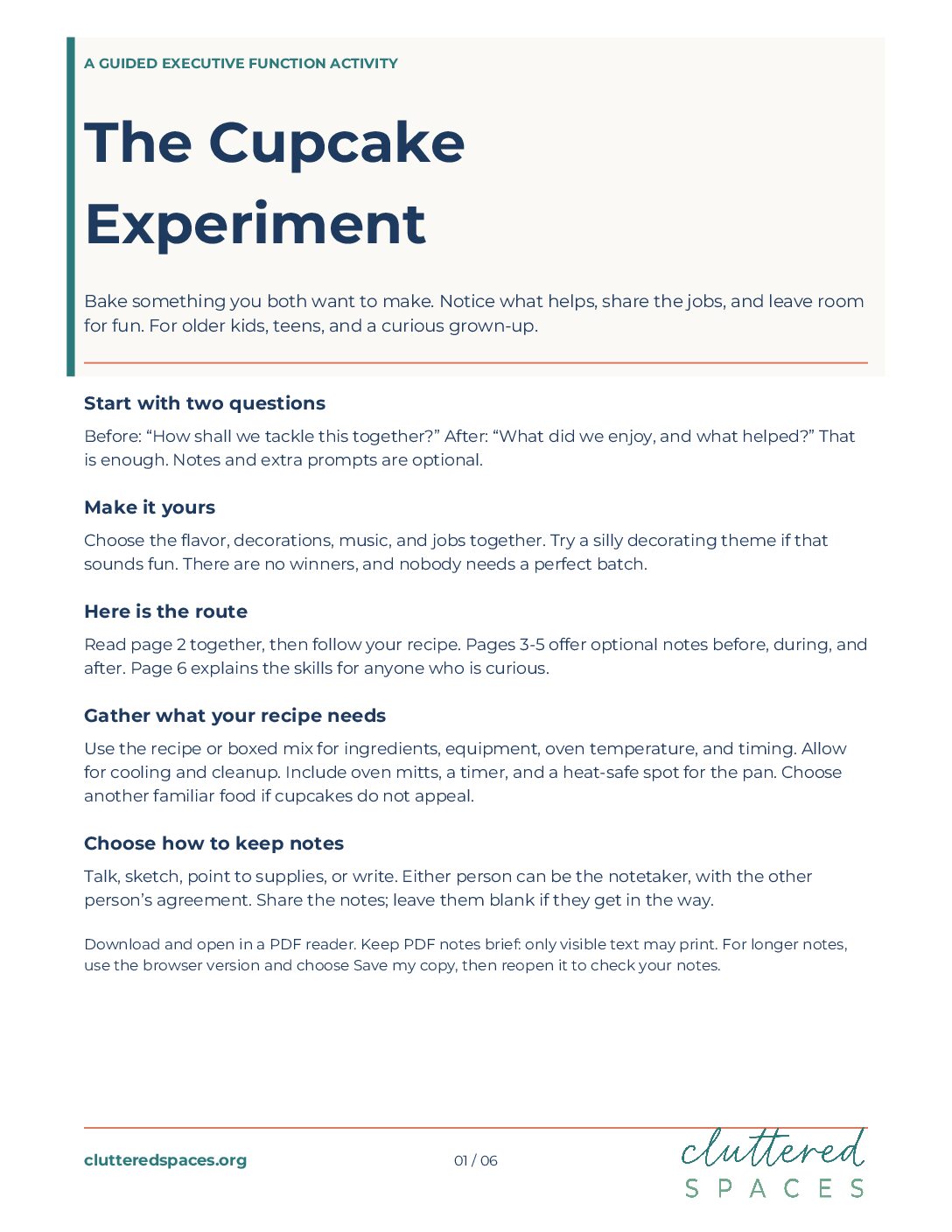
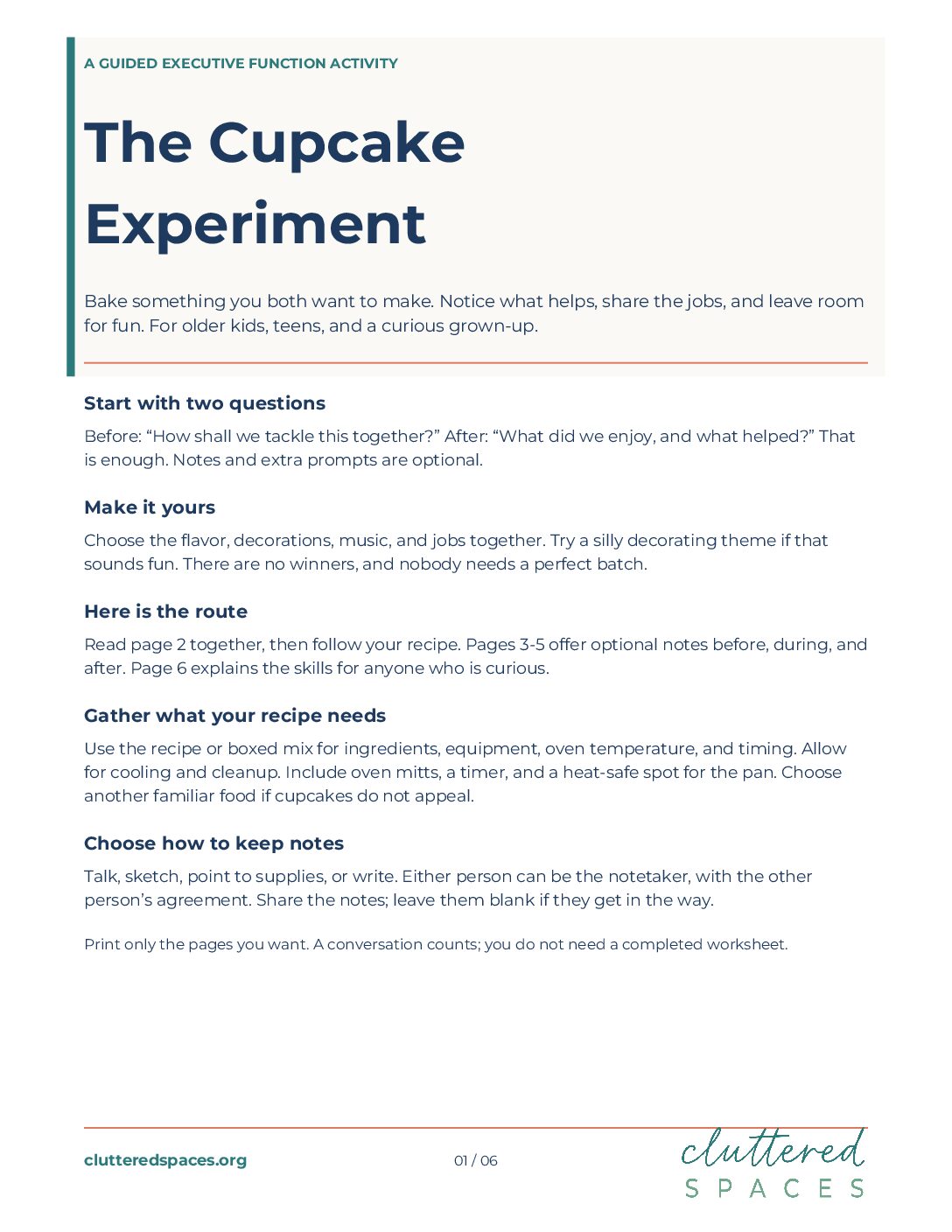
The six-page Cupcake Experiment Kit gives you a short guide for baking together, optional before/during/after pages, and a final page explaining the skills involved. Start with one question before and one afterward. Either person can take notes if you both want them. Keep notes open and shared, and leave the spaces blank if talking is enough.
Before you begin, get a glimpse of the plan
Before mixing, read the directions together and ask, “How shall we tackle this?” Each person can share what they expect and what they want help with. You might talk through the first steps or get supplies onto the counter. You don’t need to describe the whole afternoon before you can begin.
Let your own thinking show, too: “I remembered the ingredients and completely forgot somewhere to put the hot pan. Let’s clear a spot.” The grown-up gets to be a baker with a changing plan, too.
If “picture it” doesn’t make sense to them, try talking through the steps, sketching, or laying out supplies. A vivid little movie is optional. Choose a way of previewing the task that works for them.
Give an unfinished answer a moment. “I don’t know what happens after that” gives you a place to look together. You can check the directions whenever you need them.
While you bake, leave room for a surprise
Keep the directions handy and follow them. If something changes, you can say what you noticed or ask, “What could we try?” There’s no need to check every step against a prediction. The recipe stays available throughout; using it is part of making the task workable.
Try not to interview someone who is also attempting to crack an egg. Questions can wait for a natural pause, and notes can wait until afterward. Both of you should have a chance to get your hands into the activity.
When a snag comes up, give each other a moment to think and offer useful help. A prompt, a demonstration, or doing that part together may help. Don’t hide supplies, create problems, or withhold support to see what happens. Step in for safety.
The recipe, a timer, a clear counter, and another person can all carry some of the work. Learning to choose and use those supports belongs in the activity.
You can also ask, “Was there a part that felt annoying, tiring, or too much?” Sometimes what looks like a planning problem is an uncomfortable sound, a sticky texture, or a task that is still unfamiliar.
Either person can say, “Can we just bake?” Finish together and leave the notes for another day, or skip them altogether. These notes belong to the shared activity; don’t bring them out later as evidence during an argument about school or chores.
Then eat the evidence
Once the cupcakes have cooled and are ready to eat, start with “What did we enjoy, and what helped?” Each person gets a turn. That can be the whole conversation. If you’re both interested, share something you figured out together and ask whether the help you offered felt useful or distracting.
Maybe clearing a spot for the pan helped. Maybe the timer needed to be somewhere they would hear it. Maybe frosting warm cupcakes turned out to be a lesson in how quickly frosting can become a puddle.
Stay with something specific each of you noticed. “Next time I’ll get the cooling rack out first” gives you more to work with than a general reminder to be organized. You can choose several helpful supports without turning the afternoon into a project to fix everything.
Notice how the skills work together
The last page of the kit puts names to some of what just happened. Gathering supplies involves planning. Keeping a direction in mind draws on working memory. Changing the plan when something is missing calls for flexibility. Returning when the timer rings connects a cue with an intention for later.
Those parts overlap. A missing tool can interrupt the sequence; the interruption can make it harder to remember the next step. It helps to ask, “Where did the process get hard, and what helped us move forward?”
This is an observation activity, not a test of your child’s abilities. Cooking experience, unclear directions, sensory comfort, and today’s energy can change how it goes. Use it to find a helpful support, without drawing conclusions about every other task.
Take one small idea out of the kitchen
If you both want to try a useful support elsewhere, choose a familiar situation together. Agree who will get it ready and when you will check whether it helped. You can adjust it or leave it behind.
The last note page leaves room for what you enjoyed, what you figured out together, and how the help felt to each person. If you both want to take a support elsewhere, choose that situation together: “The timer helped us come back. Could a reminder help us move the laundry, too?” Try it there and adjust what doesn’t help.
Practice in everyday activities is one way adults can support developing executive skills. 3 That doesn’t mean making cupcakes will automatically change homework or morning routines. Give the useful strategy a fresh try in the situation where you want it to help.
Our article on executive-function practice offers more ways to choose a specific action to rehearse. And how independent living skills grow looks at how support and ownership can grow together.
For a low-energy version today, ask how you want to tackle the baking together and, afterward, what you enjoyed and what helped. Skip the writing if it spoils the fun. Spending time together and enjoying what you made counts as a worthwhile afternoon, even if nobody finds a strategy to carry into tomorrow.
Try the Cupcake Experiment Kit
The kit includes a guide for baking together, optional note pages, and a skill map in printable and digital formats. Keep page 2 nearby. Before baking, ask, “How shall we tackle this together?” Afterward, ask, “What did we enjoy, and what helped?” You don’t need to complete every prompt. Keep digital PDF answers brief; for longer notes, choose the browser version included in your email and use Save my copy before closing. Use the final skill map only if you’re curious about the background.
See the planning behind the cupcakes.
Baking together gives you a chance to notice where the plan gets tricky—and what helps your child or teen keep going.
Get the six-page Cupcake Experiment Kit in printable and digital formats, with shared prompts, optional notes, and a map of the skills involved.
By getting this kit, you agree to receive Cluttered Spaces emails. Unsubscribe anytime. Privacy policy.
References
- Diamond, A. (2013). Executive functions. Annual Review of Psychology, 64, 135–168.
- Barkley, R. A. (n.d.). The important role of executive functioning and self-regulation in ADHD. Author’s fact sheet.
- Center on the Developing Child at Harvard University. (2014). Enhancing and practicing executive function skills with children from infancy to adolescence.