
The Independence Lab™
Enrollment open for young adults
Small-group coaching for young adults.
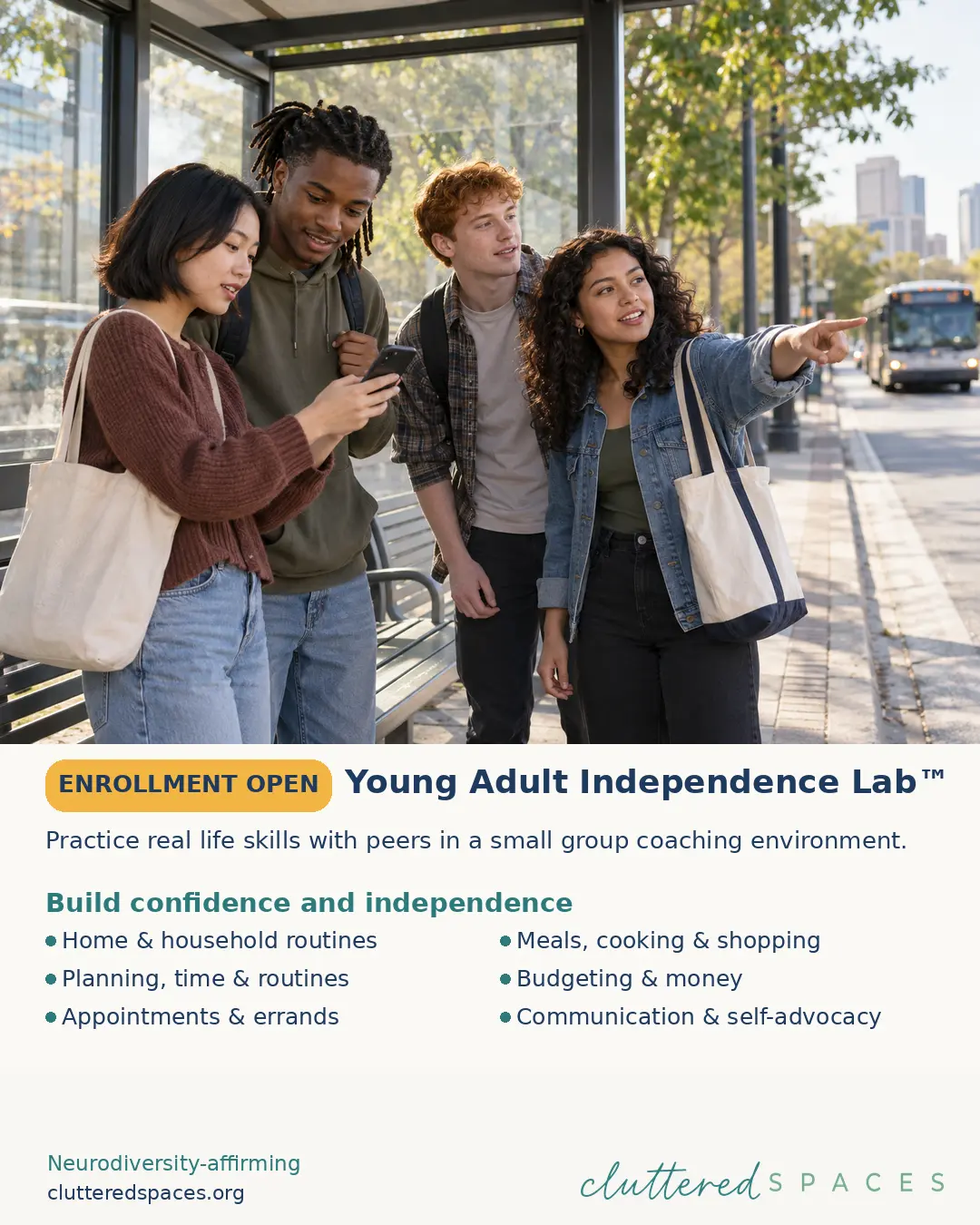
The Independence Lab helps young adults practice everyday skills with peers and neurodiversity-affirming coaching—building confidence and independence in real life.
We practice home management, meals and shopping, planning and time, appointments and errands, and communication and social skills.
In person near Decatur · 90 minutes each week · $299 per month
Get information about the program Download the free independence skills check-in journalThe interest form is a first conversation, not a commitment.
If you’re feeling cautious
You don’t need another plan that only works on paper.
You may be carrying a lot right now: the reminders, the worry about what comes next, and the hope that your child can build more confidence without feeling judged or pushed into a system that does not fit.
The Independence Lab is designed around the person—not around a perfect checklist of what they “should” already be doing. We look at strengths, current capacity, communication, environment, and the places where everyday tasks begin to break down.
It is to understand what gets in the way, practice useful skills together, and support more ownership over time.
Different stages need different support
High school students and young adults meet in separate small groups.
They may be practicing some of the same underlying skills, but they are navigating different expectations, relationships, and decisions.
High School Small Group
For students preparing for greater independence beyond school. Practice may focus on planning, follow-through, home responsibilities, communication, self-advocacy, and recognizing what support helps.
Young Adult Small Group
For young adults navigating responsibilities at home, college, work, and in the community. Practice may include meals and shopping, laundry, appointments and errands, time management, communication, confidence, and ownership.
Personalized inside the group
Small-group support does not have to mean one-size-fits-all.
Start with the person
We pay attention to what matters to them, what they can already do, and where the task first becomes difficult.
Practice real life
Members work with current routines, responsibilities, and decisions—not abstract worksheets disconnected from their day.
Adjust without shame
A strategy is useful only if it fits. Members can reflect on what happened, make the step smaller, and try a different support.
Keep ownership visible
Coaching offers structure and support while helping the teen or young adult take a more active role in their own progress.
What the work looks like
Real life is the curriculum.
A missed appointment, an unfinished laundry routine, a hard conversation, or a week that got away from them can become something practical to work through—not proof that they failed.
- Notice where a current task or routine is getting stuck.
- Choose a meaningful, manageable skill to practice.
- Try support in a small group with coaching and peer connection.
- Reflect on what helped, what did not, and what to adjust next.
- Build confidence through repeated practice rather than pressure for perfection.
Program details
Practical support, built into the week.
Intentionally small groups with peers in a similar stage of life.
Time to slow down, practice, problem-solve, and reflect.
Additional support when a question or real-life challenge comes up.
Days and times will be finalized around participant availability.
A low-pressure first step
Tell us what support would help.
Share a little about your high schooler or young adult and what you hope could feel easier. Cynthia will follow up to answer your questions and talk with you about whether the appropriate small group looks like a good fit.
Submitting this form is not a commitment. It is simply a way to begin the conversation.
If the form does not load, open the interest form in a new window.
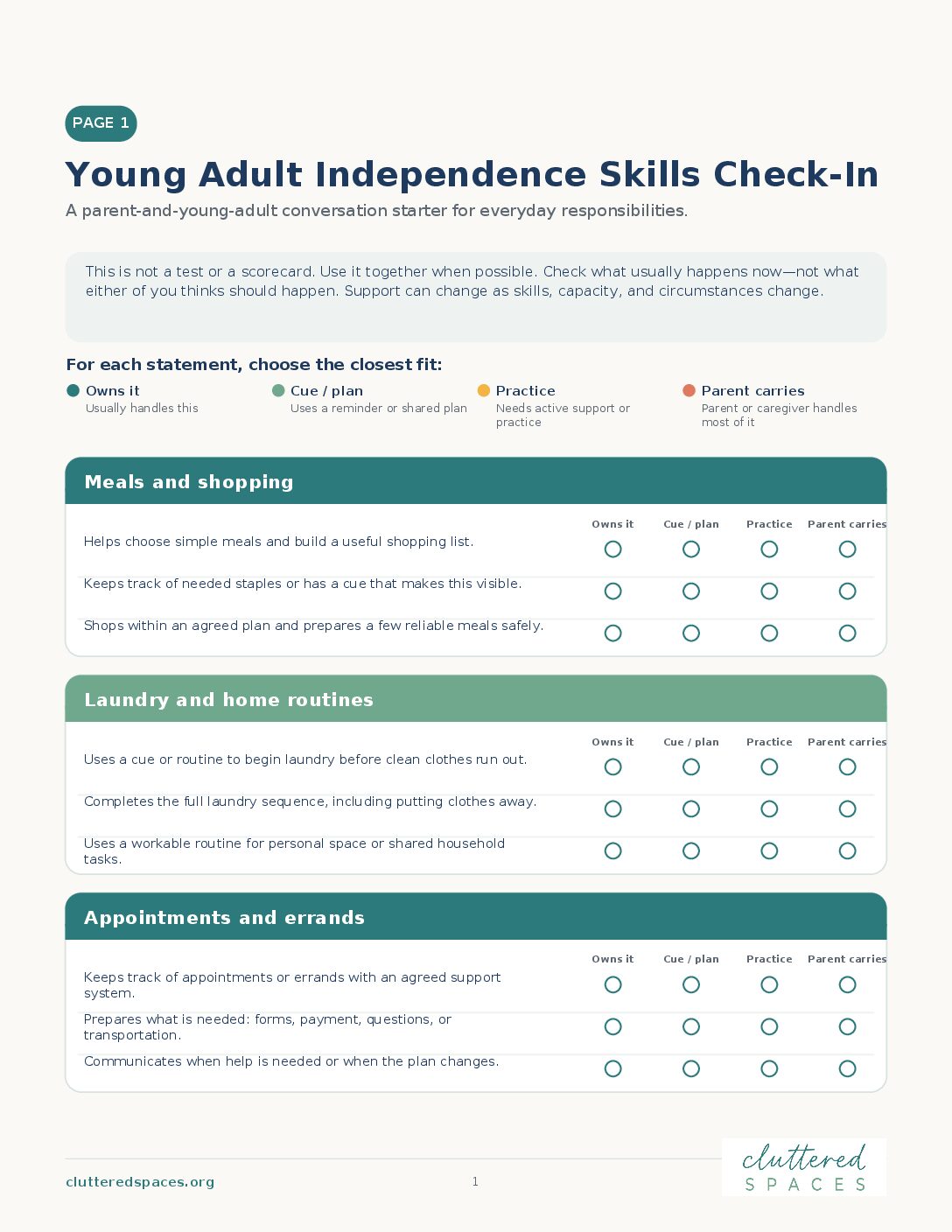
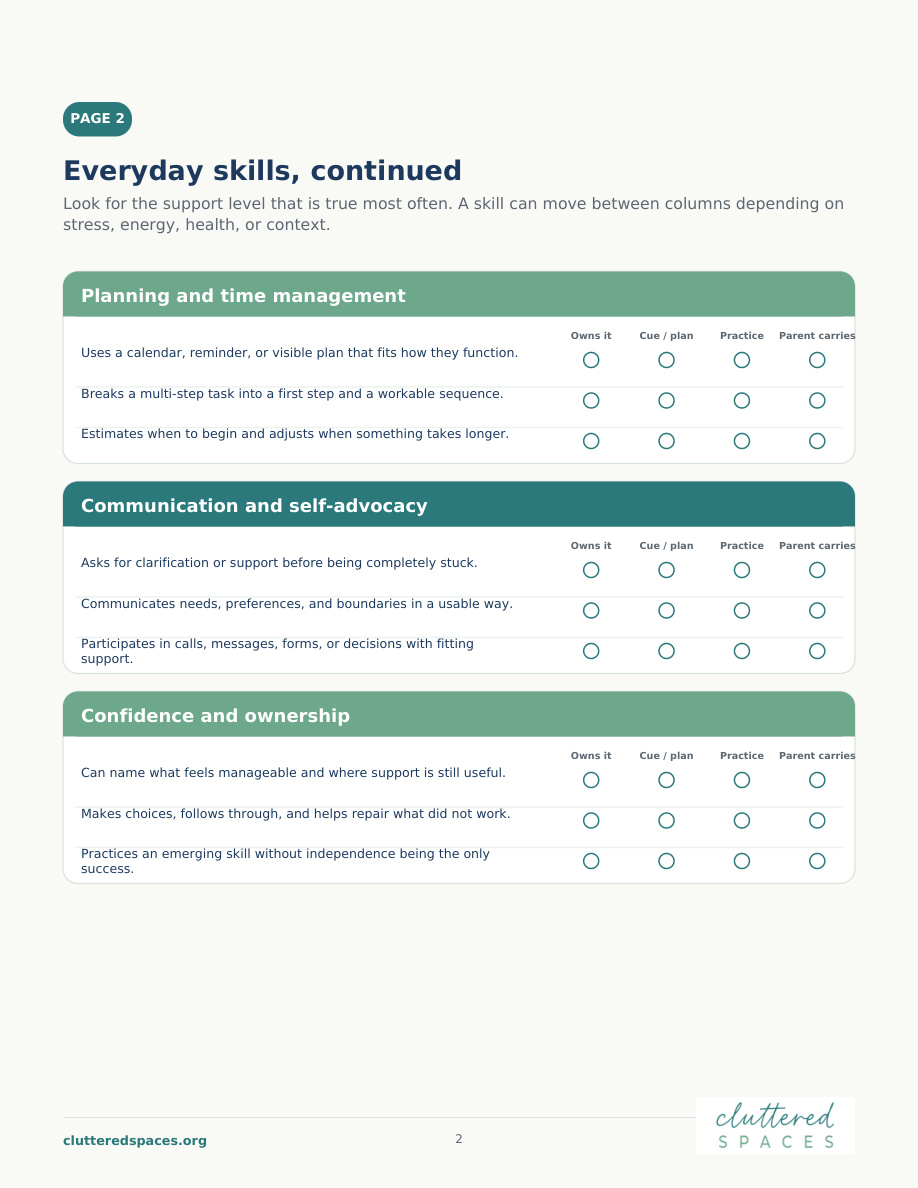
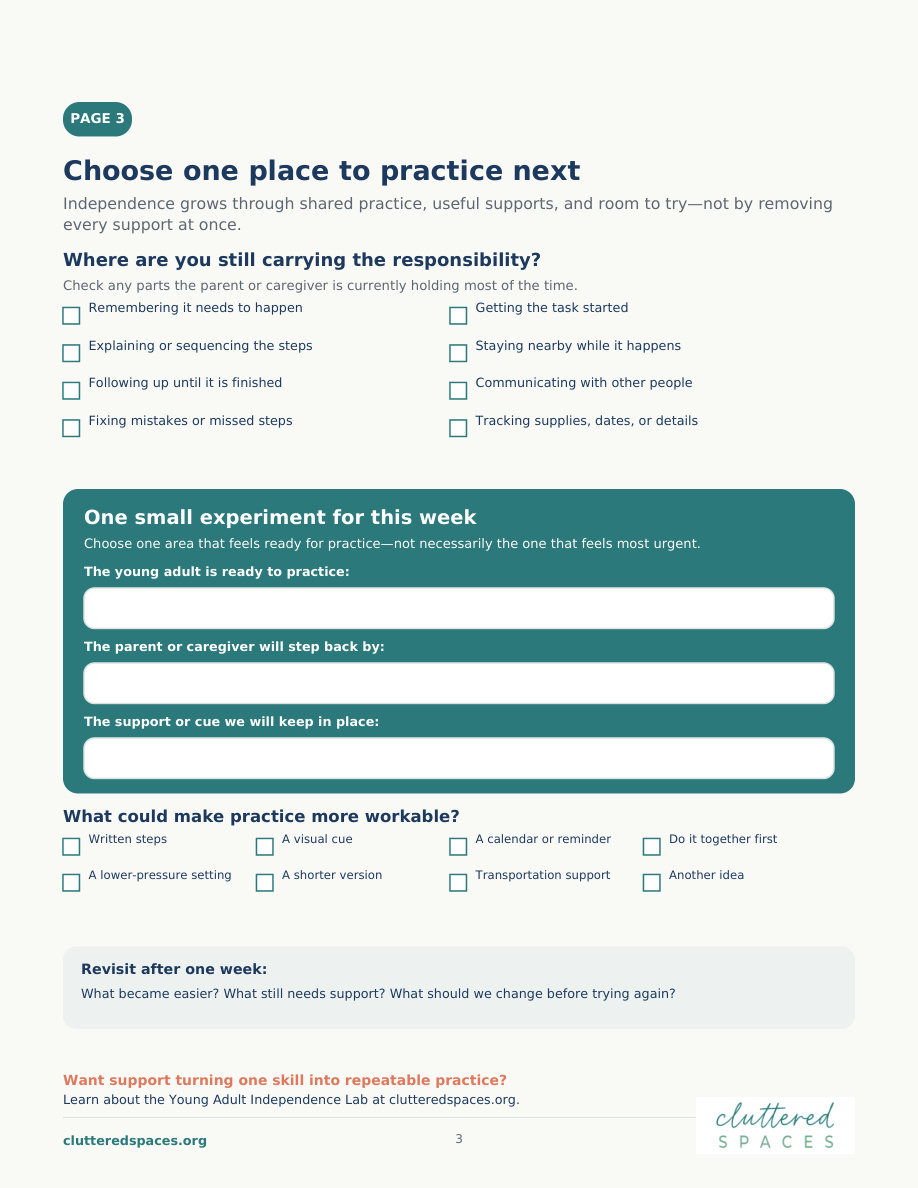
Free independence skills check-in journal
Choose one everyday skill to work on together.
Use this check-in journal with your young adult to talk about what they’re already managing, where support would help, and what they’d like to practice next.
Enter your email to receive the printable and digital PDFs.
If the form does not load, open the download form in a new window.