Step-by-Step Guide to Home Routines That Actually Work
You had a plan. Laundry on Tuesday. Kitchen reset after dinner. Bags packed before bed. For a few days, it even worked.
Then dinner ran late, someone needed help, and the clothes stayed in the dryer. By morning, finding a clean shirt had become a household event. Now the plan on the refrigerator feels less like help and more like a list of things you are behind on.

Before you make a stricter schedule, it is worth looking at what the routine was asking you to do. Was there time to finish? Were the supplies nearby? Did everyone know their part? Was there a version for a tired evening, or did the whole thing depend on having a good day?
Household routines work better when the steps, surroundings, and support fit the people using them. That includes how you start, where things go, who carries the work, and how you come back when life interrupts. You can build those pieces together without redesigning your entire life.
Start with what you need the routine to make possible
“Stay on top of the house” is a lot to ask of a Tuesday.
Try describing the result you actually need. Everyone can find clean clothes. There is space to make breakfast. Bills that need attention reach the person who will handle them. You can leave home with the things you need.
Those results help you decide which steps matter. If the goal is findable clothing, folding every T-shirt may not help. If the goal is preparing lunch, cleaning the entire kitchen may be unnecessary, but a usable work surface and clean containers matter quite a bit.
A routine is a repeatable path toward a useful result. A schedule can give that path a time. A habit can make a familiar action feel more automatic. Neither guarantees that the supplies, energy, or handoffs will be there when you need them.
If you have ADHD, remembering a future step, managing time, and finishing a task can take more effort. Other people may be working around pain, sensory discomfort, caregiving, or unpredictable work hours. The same plan will not fit everyone. Our guide to executive function at home explains why a task that looks simple can ask for so much behind the scenes.
Follow what really happens from beginning to end
Think about the last time a routine got stuck. Walk through the actual sequence, including the parts that are easy to leave out of a checklist.
For laundry, that includes noticing what needs washing, collecting it, checking supplies, washing, moving it to dry, hanging or folding, getting it to its storage place, and making the setup ready for another load. Waiting for a machine and asking someone to collect clothes belong on that map, too.
You may discover that the trouble starts before the pile appears. The clothes reach the bedroom, but the drawers are full. A bill reaches the desk, but no one knows whether it has already been paid. Groceries arrive, but putting them away requires clearing the refrigerator first.
Ask where the next action becomes difficult. Is it unclear, uncomfortable, easy to forget, physically awkward, or dependent on someone who does not know they are involved? The Five Whys can help you look beneath a recurring problem without turning the conversation into an interrogation.
Short notes, a photo, or a conversation can be enough. You do not need a beautifully drawn process map to notice that all the hangers are upstairs.
Include the routines that depend on each other
Getting out the door may depend on clean clothes, a packed lunch, a charged device, and knowing where the keys landed yesterday. If you work only on the departure checklist, you may keep arriving at the same missing pieces.
Look at the connections that affect the result you need. Perhaps lunch packing needs to happen while dinner food is being put away. Perhaps arriving home needs a place for keys and a path for the lunchbox to reach the kitchen. You can change several connected routines and use multiple supports when that is what makes the plan workable.
You also get to set a boundary. Preparing tomorrow’s lunch does not have to become a pantry overhaul. Include what the routine depends on; leave unrelated projects for another time.
A place to work through the sticking points
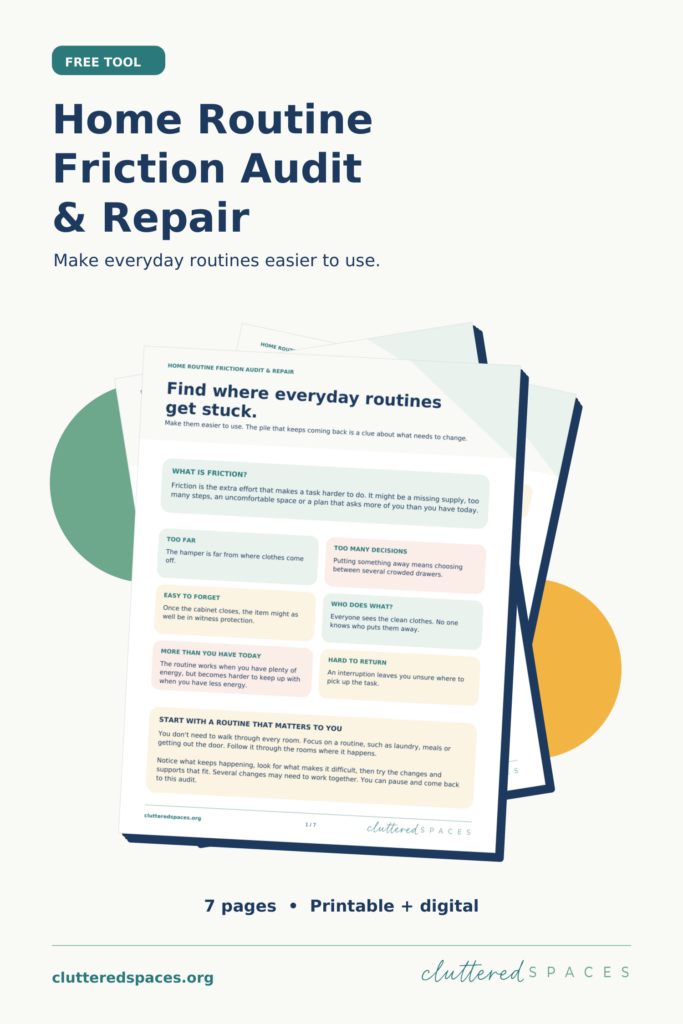
The free Home Routine Friction Audit & Repair gives you space to notice what keeps happening, inspect what makes it harder, and test changes that work together. It includes a laundry example and planning pages for supports, responsibilities, and returning after interruption.
For example, “clean clothes never reach the closet” might lead you to put hangers near the dryer, make room in the closet, and agree on a pickup cue. A reminder alone would not solve all three problems.
You can request the seven-page printable and digital PDFs by email. The request also subscribes you to Cluttered Spaces emails; you can unsubscribe anytime. Use the parts that help you make a decision, then keep the useful plan near the routine.
Give the routine a cue you can actually use
“Do it later” leaves you with another thing to remember. A useful cue tells you when to notice the task and what to do next.
That cue might be an event: when you bring your dinner plate to the kitchen, put away the leftover food. It might be a visible condition: when the hamper reaches the marked line, check the next available laundry time. Or it might be a reminder that names the action: “Move washed clothes to dryer.”
Choose a cue that reaches you when you can respond. A dryer chime you cannot hear from your workspace needs another route. An alert that arrives while you are driving needs a later return point. More reminders are not automatically more useful.
An anchor is a familiar moment that helps give the day some shape, such as arriving home or finishing dinner. A process checkpoint tells you where a particular task stands. At an after-dinner anchor, you might check the laundry. If it is still washing, the next action is different from a load that is dry and ready to put away.
This distinction keeps a missed morning from making the rest of the day unusable. You can enter at the next familiar moment and check what is actually needed. If moving from one activity into another is the difficult part, making task transitions easier may help more than a louder alarm.
Make the setup comfortable and possible to use
Walk the path as the person who will do the work. Can they reach the shelf, open the container, carry the load, read the label, and tolerate the space long enough to finish?
A hamper downstairs will not help much if carrying it is painful. A supply caddy can save trips, but it needs to be light enough to move. Written steps may help someone who loses their place; pictures, larger print, spoken prompts, or a demonstration may work better for someone else.
Sensory demands count. Wet food in the sink, fragranced detergent, a loud machine, or bright lighting can make an otherwise familiar task unpleasant enough to avoid. Options might include comfortable gloves, a tolerated unscented product, different lighting, or doing a quieter part of the task elsewhere. Ask what helps the person using the space. Preferences and needs differ, including within the same household.
Keep supplies near the action when safe. Store cleaning products in their original labeled containers, with child and pet safety in mind. Keep routes and exits clear. Convenience should not create a new access or safety problem.
Then include replenishment. When detergent gets low, how does that information reach the shopping list? Who checks the list before shopping, and who returns the purchase to the laundry area? “We have detergent somewhere” is a surprisingly unreliable inventory system.
If storage is the main barrier, the ADHD-friendly home organization guide goes further into making everyday items easier to find and put away. Here, the question is how that setup supports the next step of the routine.
Share the work that happens before and after the chore
“Tell me what needs doing” can sound helpful while leaving someone else responsible for noticing, planning, assigning, and checking everything.
Research on household labor recognizes that anticipating needs and monitoring results are work, too. In practice, sharing a routine means talking about those parts as well as who loads the dishwasher.
Agree on who notices the need, who begins, who carries each step, and how everyone knows the result is ready. A handoff should name the person, action, and cue: “After dinner, take your hanging clothes to the closet and bring empty hangers back.” Check that the person understands and can manage what they are taking on.
For children and teens, show and practice the steps together. Ask what support they want and what makes the task hard. A picture sequence, a shared start, help with carrying, or a reminder may remain useful. Support does not have to disappear for ownership to grow.
Fair does not always mean identical tasks. A person who cannot carry laundry may be able to sort seated or manage the supply list. Someone may need ongoing assistance. Make that support an agreed part of the routine, including what happens when the usual helper is unavailable.
For a household with partners or roommates, sharing household responsibilities deserves its own conversation. Agree on the necessary result before debating preferred folding methods.
If you live alone, you still need a handoff between now and later. Leave the next action where you will use it, and include outside help when it is available and wanted. A plan cannot manufacture time, money, or physical capacity; sometimes the useful change is reducing the work or arranging assistance.
Decide what finished looks like on different days
Words like “clean” and “done” can mean different things to everyone in the house. Choose an ending you can see: food is stored safely, tomorrow’s containers are usable, and the preparation space is clear enough to make breakfast.
Your full-capacity version is the ordinary routine when enough time, energy, and support are available. It should still have a stopping point. Full capacity does not mean you must add every cleaning task you can think of.
The low-capacity version protects what is needed now while reducing the demands. It might cover tomorrow’s clothing and leave optional folding for later. It also says where unfinished work waits, what happens next, and when to return. A contained pause is useful; an unnamed pile that grows indefinitely needs a different plan.
Review temporary arrangements if they become the usual pattern. You might need more help, fewer steps, or a permanent change in storage. A lasting accommodation, such as keeping everyday clothing in accessible open bins, can be a good design choice. It is different from repeatedly dropping an unsorted basket wherever there is room.
Our minimum-version routines article explores how to reduce demands without losing the function you need.
A complete laundry routine from hamper to getting dressed
Imagine a household that regularly washes clothes, then loses them in clean baskets. Washing is working. Finishing asks for hangers from another room, space in crowded closets, and a person who somehow knows pickup is their job.
The useful result is clean, dry clothing that people can find and wear, with the laundry area ready for the next load. Here is a possible routine to adapt.
Prepare the places clothes will go
Check that everyday clothes have room in their drawers, bins, or closet. Move outgrown or out-of-season items out of those everyday spaces as needed; a complete wardrobe project can wait.
If the space allows, put a stable rack and accessible hangers near the dryer. Keep them clear of appliance vents, heat sources, doors, and walking routes. Put a place for empty hangers beside the rack. If there is no room for a rack, take suitable clothes directly to a nearby hanging space or use a safe drying or folding setup that fits your home.
Choose clear destinations for towels, socks, and clothes that do not need hanging. Everyday shirts might go unfolded into an accessible drawer. The destination matters more than a particular folding style.
Collect and start with the next steps in mind
Put dirty-clothes hampers where clothing actually comes off, if practical. Agree on a cue to check them, such as a visible fill level or a regular household planning time. Match load size and timing to machine instructions, clothing care, and the help available to move and finish the load.
Before starting, check detergent and whether there is space to dry the clothes. Choose how the person handling the transfer will know the wash is ready. If the machines are shared or at a laundromat, include booking, payment, transport, and the return trip. Those are real parts of the work.
Move through washing and drying
When the wash finishes, the agreed person moves it to the dryer or drying area. If they cannot respond to the alert, they arrange a specific return reminder or ask the backup person to accept the handoff. An alarm dismissed from another room is not a completed transfer.
When clothes are dry, hang suitable items as they come out. Fold towels nearby and group the remaining items by their destination. Avoid moving everything to another room just to begin sorting again, unless that location is more accessible or comfortable.
Make pickup and putting away part of the routine
At the agreed cue, each person collects their clothing with whatever help they need. They bring empty hangers from their closet, leave them in the laundry area, and take the clean hanging clothes back. Towels go to their shelf; socks and other clothes go to their drawers or bins.
The hanger exchange prepares the next load. So does keeping storage simple enough that putting clothes away is a manageable action. If the closet is hard to reach, change the destination or arrange help with that step.
Close the loop on supplies and space
Whoever notices detergent reaching the agreed low point adds it to the shared shopping list. The shopper checks that list, and the person unpacking groceries returns detergent to its safe storage place. If ordering is automatic, someone still checks whether the quantity and timing fit actual use.
The full routine ends with clothing in its usable storage, the rack or drying area ready, empty hangers available, and low supplies recorded. It does not require washing every item in the home that day.
Plan the harder-day version and the return
On a depleted day, identify the clean clothes needed next. Wash and dry missing essentials if necessary. Put those clothes where they can be found. Remaining dry items can wait temporarily on the rack or in a designated clean-clothes holding space, separate from dirty laundry.
Leave a specific next action: “Towels need to go to bathroom shelf; Jordan will carry them after breakfast.” If the rack is full, clear enough space or use the agreed alternative before adding another load. Arrange help if the next stage is beyond today’s capacity.
At the return point, check the actual state of the laundry. Finish what is already washed before automatically starting more. If the holding space fills after every load, revisit pickup timing, load size, access, storage, or available help. More baskets may simply give the unfinished work more places to live.
After a few loads, ask whether mornings involve less searching, whether clothes reach their destinations, and whether hangers come back. That tells you more about the routine than a perfect streak on a chart.
Use the same questions around the house
Kitchen closeout and tomorrow’s lunch
When dinner ends, put food away safely and decide what will become lunch. The person handling containers checks that they are clean and usable; the person packing knows where the food and bag will wait. Clear enough preparation space for breakfast. A fuller version can include the dishwasher, wiping surfaces, and returning supplies.
On a harder evening, protect safe food storage and the items needed for the next meal. Record what remains and choose a return point. If lunch packing fails because there are never clean containers, connect that step to the dish routine rather than adding another reminder to pack.
Arriving home and leaving again
Place keys, shoes, bags, and mobility or communication equipment where their users can access them. On arrival, send the lunchbox to the kitchen and anything requiring action to its agreed place. At the next preparation cue, check the calendar and gather what is needed for the next departure.
The finish is a usable departure setup. On a low-capacity evening, prepare essential items and postpone optional bag sorting. If a phone must stay on its charger elsewhere, use a visible reminder at the door instead of assuming it can live with the keys.
Mail and paperwork
Choose an incoming location and an owner for reviewing what arrived. During that review, identify the next action and any deadline; put it in the calendar or task system already being used. Keep documents available where the action will happen, while protecting private information.
Finish by confirming that the required action happened and storing what needs keeping. Putting a bill in a tray is a useful middle step, not evidence it was paid. On a difficult day, identify urgent items, contain the rest, and choose when and with whom to return.
Household supplies and groceries
Keep a shared list where people can actually add to it: paper in the kitchen, an existing phone list, or another familiar tool. Agree on what “low” means for essentials so the signal comes before the last usable amount is gone.
Adding an item is the first handoff. Checking the list, buying within the household’s budget, unpacking, and returning it to the place of use finish the path. If shopping falls through, name an available alternative rather than leaving everyone to discover the missing item separately.
Restart from where you are now
Travel, illness, grief, changing schedules, and ordinary interruptions can leave a routine with missing pieces. Start by asking what needs to work next and what is already available.
If tomorrow needs clothes, lunch, and a packed bag, plan those connected needs together. Contain postponed work somewhere it can wait safely. Identify the next physical actions and the help required, then choose an event or reminder that makes the return visible.
Keep backlog work separate from today’s essential routine. You can prepare a meal without first resolving every overdue household task. You can return to the evening anchor even if the morning never came together.
Research on habit formation suggests that repeating actions in a consistent context can help them become more automatic, and an occasional missed opportunity need not erase that process. That research does not tell us that a complex household routine will become effortless on a fixed timetable. Your routine may continue to need visible cues, practical help, and adjustment.
If restarting is the immediate problem, Your Routine Fell Apart Again. How Do You Start Over? offers a shorter place to begin.
Try it where life actually happens
Use the plan during an ordinary week or several repetitions. Notice whether it removes searching, extra trips, repeated prompts, or uncertainty. Ask the other people involved what felt easier and what still asked too much.
You do not need to document every attempt. A brief conversation beside the dryer may tell you that the rack works, but pickup happens after everyone has already gone upstairs. Moving the pickup cue may be more useful than rewriting the whole routine.
If a short memory aid helps, the existing ANCHOR questions can guide that review:
- Attach: What event or cue makes the next action visible?
- Name: What useful result are we working toward?
- Cut: What unnecessary demand can we remove or postpone?
- Hold: Where will the steps and supports stay available?
- Observe: Where does the routine still get difficult?
- Restart: How will we return after a pause?
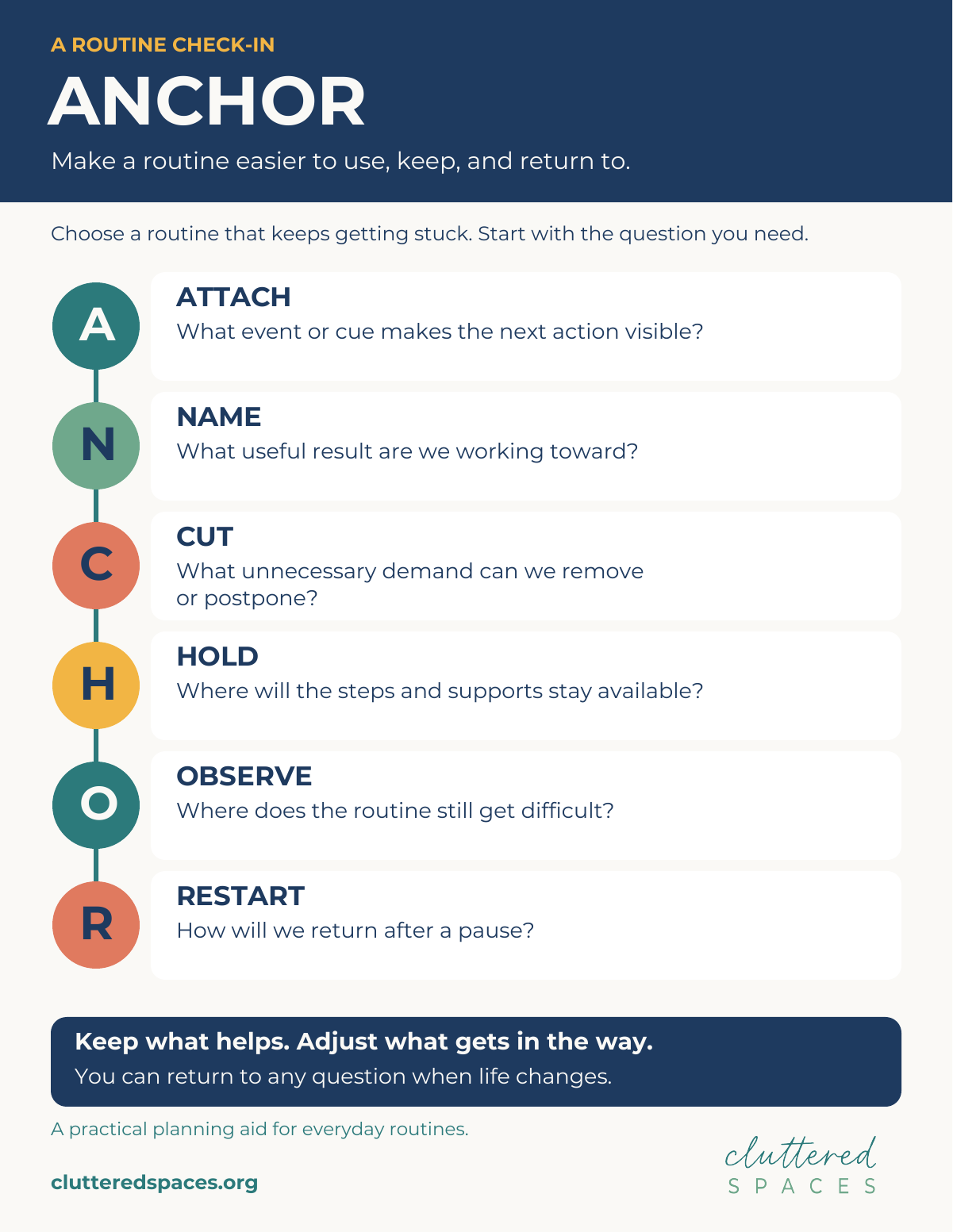
Open full-size for easy reading and download.
ANCHOR is an optional planning aid, not a clinical model or another system to memorize. It fits within Notice → Inspect → Test: understand what happens, adjust what gets in the way, and try the plan in real life.
Keep the cues, supplies, agreements, and support that help. Change them when the household changes. The question is whether your home asks less of you while still making daily life possible.
Keep the useful parts close by
If you want help finding the sticking points, request the free Home Routine Friction Audit & Repair. If you already have a plan and want to check its supports and return points, Will This Work in Real Life? offers a free guide and a separate everyday plan for your fridge or phone. Both use email signup and include printable and digital formats.
You do not need to complete a workbook before trying a change. A hanger supply beside the dryer, a clear handoff, and a plan for tomorrow may be the parts you keep using.
Suggested next step
If the routine makes sense on paper but still falls apart at home, we can work beside you to follow the steps, adjust the setup, practice useful supports, and make returning easier. Bring the parts that are difficult; you do not have to arrive with a finished plan.
Recommended service: Executive Function Coaching.
References and further reading
National Institute of Mental Health. (2024). ADHD in Adults: 4 Things to Know. Background on planning, organization, remembering daily tasks, and task completion in adult ADHD.
National Institute for Health and Care Excellence. Attention deficit hyperactivity disorder: diagnosis and management (NG87). Environmental modifications and individualized support. Current recommendations consulted October 16, 2026.
National Institute for Health and Care Excellence. Autism spectrum disorder in adults: diagnosis and management (CG142). Guidance on individual sensory needs and adapting the physical environment. Consulted October 16, 2026.
Lally, P., van Jaarsveld, C. H. M., Potts, H. W. W., & Wardle, J. (2010). How are habits formed: Modelling habit formation in the real world. European Journal of Social Psychology, 40, 998–1009. Research on context, repetition, and habit formation; not a trial of household routines in neurodivergent people.
Daminger, A. (2019). The cognitive dimension of household labor. American Sociological Review, 84(4), 609–633. Research distinguishing the mental work of household management from task execution.