
Why Family Routines Need to Work for Parents, Too
The school sends a reminder about picture day. Somebody needs clean gym clothes, there’s a permission slip on the counter, and the dentist appointment is still waiting to be scheduled. Meanwhile, dinner needs to happen.
You’ve probably been told that kids need consistent routines: checklists, predictable expectations, and follow-through. Reasonable advice. But who’s maintaining all those systems?

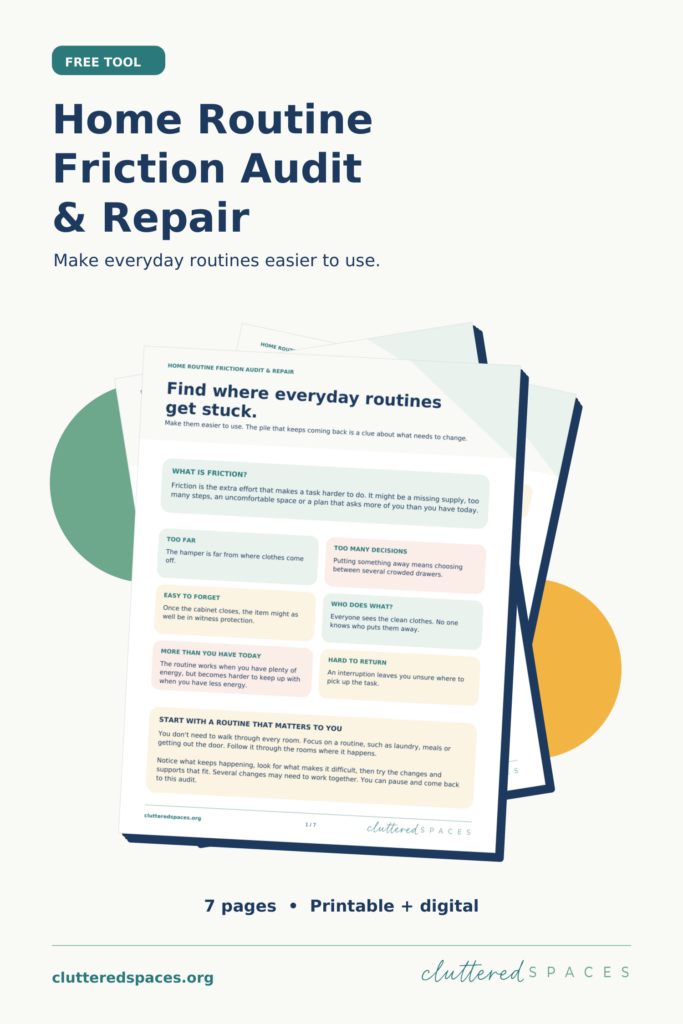
If you want to see the work behind a family routine, the Home Routine Friction Audit & Repair gives you a place to map it together. Its laundry example includes the steps around the visible chore, so you can notice what needs to be shared or supported.
A child’s checklist can still be a parent’s workload
A morning checklist might say: get dressed, eat breakfast, brush teeth, pack the bag. Behind it, someone has to make sure clothing is clean, breakfast is available, school materials are ready, and there’s enough time to leave.
For parents with their own ADHD or executive-function challenges, that invisible coordination can be particularly demanding. You may be supporting your child’s time management while struggling to manage your own. Both people need workable supports. Understanding executive function can help you name the demands a routine places on each person.
Make the system carry more of the remembering
Notice where you have become the household’s only reminder. Appointments, permission slips, homework submissions, medication refills, dinner plans—how much lives solely in your head? A shared calendar, designated school-paper location, and visible evening preparation routine can help, but only if your family can realistically use them.
A beautiful command center nobody looks at won’t help. A family command center needs a clear job and an agreed time to use it. Nor should you have to remind everyone to look at every reminder.
Share ownership without pretending support is unnecessary
A teenager might be capable of washing clothes but need help remembering when to start. A younger child might pack their own backpack but still need an adult to check a school notice. Separate the parts they can manage from the parts that still need collaboration.
Independence grows when responsibility transfers gradually and visibly—not when parents abruptly step away or keep supervising every detail forever.
Plan for full-capacity and difficult days
On an ordinary night, your family may pack lunches, reset the kitchen, check school materials, and prepare for tomorrow. On a hard night, decide together what is essential for the morning and what can wait. Set a realistic time to check in about returning to the fuller routine. If illness, disability, or ongoing demands change what is manageable, revise the routine or add support rather than treating the smaller version as a failure.
Look at the work your family is carrying
Choose a recurring point of friction—mornings, homework, or laundry—and include connected routines when they affect it. Use the step-by-step home routines guide to write down the work involved, including the steps adults perform behind the scenes. Then decide what can be made visible, shared, simplified, or practiced by someone else.
For example, a teen might pack lunch after dinner while an adult keeps the shared shopping list current. Put containers where the teen can reach them and agree on a backup for nights when cooking runs late. Ask everyone what would make their part manageable; sharing ownership includes sharing the planning.
A good family routine shouldn’t depend on one exhausted person holding every piece together. It needs to work for parents, too.
Make the routine work for the people carrying it
Follow the routine through the places where it happens and notice which steps need clearer cues, easier access, or shared support.
Receive the free seven-page printable and digital PDFs, including a worked laundry example and space to plan changes that work together.
Requesting the tool also subscribes you to occasional Cluttered Spaces emails. Unsubscribe anytime. Privacy policy.
References
Lindström, T., López-Pinar, C., Zakirova-Engstrand, R., Jonsson, U., Bölte, S., Sjöwall, D., & Hirvikoski, T. (2026). A systematic and explorative literature review investigating parent training interventions for parents with ADHD. Journal of Attention Disorders. Read the study.
Research background: Lindström and colleagues (2026) reviewed parent training tailored to adults with ADHD. Findings suggest that tailoring support to a parent’s executive-function needs may help, although evidence remains limited. These studies evaluated parenting interventions, not household routines specifically.