
An Organized Home Isn’t Always a Functional Home
You’ve spent the weekend getting the house organized. The counters are clear, the baskets are labeled, and everything has a place. By Wednesday, the kitchen counter is collecting mail again, and the laundry is back on the chair. What happened?
Maybe nothing went wrong with the organizing. Maybe the system looked good when everything was put away but didn’t quite fit the way your household lives. There’s a difference between an organized home and a home that functions well.

If laundry keeps piling up even after you’ve reorganized it, the problem may be more than storage. A reminder to move a load can help, but the drawers also need enough room for clean clothes. Look at the whole route—not just the last pile. The Home Routine Friction Audit & Repair gives you a place to trace those steps and try changes; the free printable and digital tool is available by email below.
Your home needs to work on an ordinary Tuesday
It’s easy to build a system for the ideal day—the day when everyone remembers what to do, has enough energy, and puts everything away. Your home also has to work when you’re running late, the kids have paperwork to sign, or somebody is sick.
Imagine a beautifully organized kitchen cabinet that requires removing six things to reach the breakfast supplies. Or neatly labeled laundry baskets with no realistic plan to wash, fold, sort, and return clothes to their rooms. The storage isn’t the whole problem. The work still needs to move through the home. Executive-function supports can make those less visible steps easier to notice and manage.
Look at what happens between the steps
Rather than focusing only on unfinished laundry, look at where the process stalls. Does anybody know when to start? Is laundry forgotten in the washer? Is there a comfortable place to fold? Are drawers so full that clean clothes are difficult to put away? You may need a combination of changes, not another storage bin.
Don’t make the system another job
Sometimes organizing adds new chores: maintaining an app, updating a chart, policing a basket system, and reminding everyone to follow it. If keeping the organizing system going feels like another chore, the system probably needs some work. The reminders, containers, or charts should make everyday jobs easier—not give one person another thing to manage.
Ask: Can we reach what we need? Does everyone understand how the routine will work? Can we keep it going on a busy week? What happens when we miss a day? And, most importantly, do the people living here actually want to use it?
Standards and flexibility can coexist
Agree together on what needs to happen for your home to feel safe and usable. Clean dishes and accessible clothes may matter more than folded towels or empty counters. Plan for the essentials on harder days, decide what can wait, and choose when to review the plan. If capacity stays lower, adjust the routine and support to fit. The Will This Work in Real Life? guide can help you plan for maintaining and restarting connected routines.
Try this in your home
Choose a spot you’ve organized more than once—maybe the kitchen counter, the entryway, or the chair that keeps collecting laundry. Watch what happens there during a few ordinary days.
- Notice what arrives and who needs to use the space.
- Follow the job from beginning to end. Where does something wait, get forgotten, or need rescuing?
- Look for what’s missing: an easy-to-reach place, a cue, a decision, enough time, or an agreed handoff.
- Change the part that’s making the work harder. For example, move the mail basket to where mail lands, or make room in drawers so clean clothes can go away.
- Try the change during a real week. Ask the people who use the space what helped and what still feels awkward. Adjust it together.
You don’t need to fix the whole room today. You’re looking for changes that make the whole job easier to finish and repeat.
The goal isn’t a perfect-looking home. It’s one where people can find what they need, get everyday work done, and recover when life interrupts the plan.
If you’re still figuring out where a routine gets stuck, the Home Routine Friction Audit & Repair is the starting point. If you already have a plan that doesn’t hold up through ordinary weeks, Will This Work in Real Life? helps you plan for maintaining it and starting again.
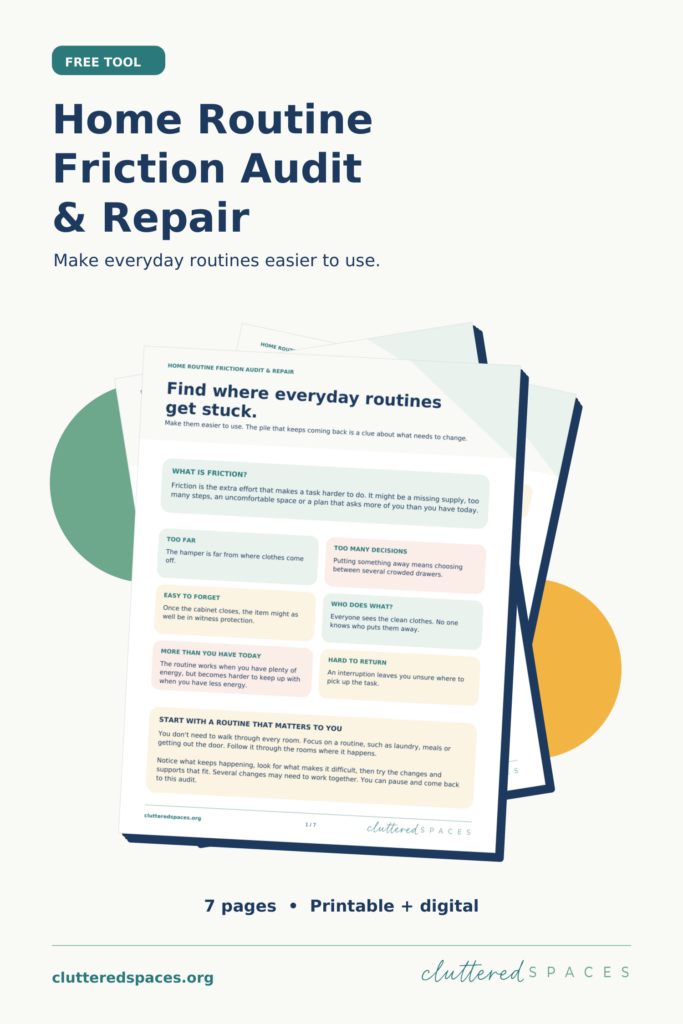
Find where your home routine gets stuck
Follow the routine through the places where it happens and notice which steps need clearer cues, easier access, or shared support.
Receive the free seven-page printable and digital PDFs, including a worked laundry example and space to plan changes that work together.
Requesting the tool also subscribes you to occasional Cluttered Spaces emails. Unsubscribe anytime.
References
LaPoint and colleagues (2026) reviewed environmental structuring interventions for autistic individuals. Their findings offer context on designing supports around the people using them, but do not directly test household organizing systems. Read the review.